
Adra · How logging works
One photo. That is the whole input.
Plate, package, or label. Adra reads the photo first and routes it to the right reader, so you never pick a mode before you shoot.
The flow
-
Take one photo.
The camera does not ask what you are shooting. Aim at the plate, the package, or the label and press once.
-
Adra looks first.
Before anything is logged, the app reads the picture to see what it holds: a barcode, a printed nutrition label, or a meal on a plate. That decision happens on the phone, in the moment.
-
It picks the reader by itself.
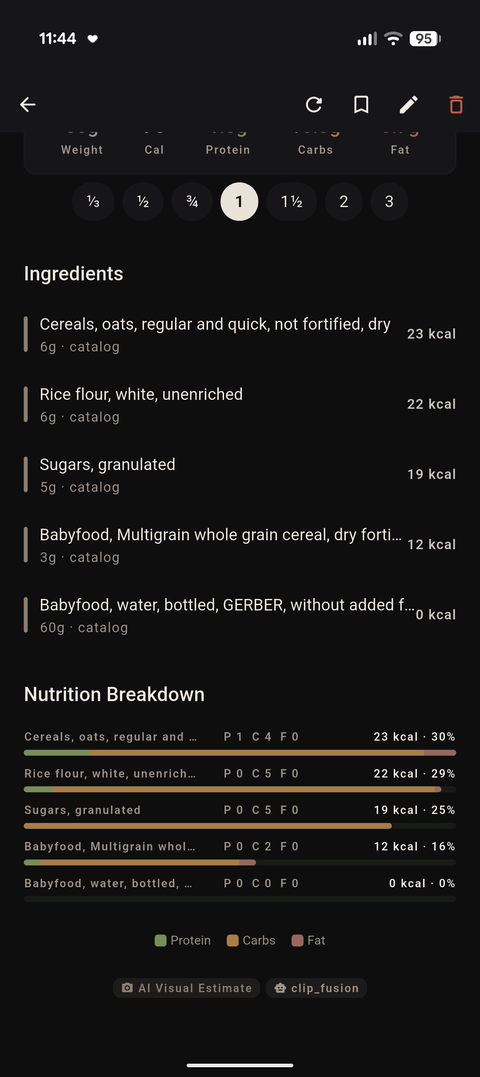
Packages go to the barcode lookup. Labels go to the label reader. Plates go to food recognition, which returns an ingredient breakdown rather than a single guess.
-
A missed barcode is not a dead end.
If the barcode is unknown, the same photo continues through the label and image path instead of stopping. A product the catalog has never seen still has a chance to be read.
-
You confirm and move on.
The suggestion arrives with its numbers attached. Adjust anything with the Fix it button, set the portion, and the day updates. Nothing counts until you say so.
What happens behind the shutter
Every photo runs through the same three checks, in the same order, and the routing itself never leaves the phone. There is no menu of modes to learn, because the picture already carries the answer.
Logging should cost less effort than the meal it describes. That is the reason the routing is automatic: the fewer decisions between you and a logged meal, the more likely the meal gets logged.
One photo in
├─ barcode found     → local catalog → bundled USDA data → Open Food Facts
├─ label found       → text read → table rebuilt → macros
└─ neither           → food detection + image match → ingredient breakdown

A missing barcode is not a dead end. The same photo continues down the list.
The first two stops are offline, which is why the flow holds up in a kitchen with no signal. Only the last barcode step, for products the local catalog does not know, reaches a public database over the network, and even then it sends the barcode number alone.
Days of photos at once
A day of eating rarely happens in one sitting. Came home with twenty photos from a trip or a long weekend? Add them in a single batch, and Adra reads the recording date from each photo and files every meal on the day it belongs to. You catch up in one pass instead of twenty.
All of this on your phone
Recognition, label reading, and matching all run on the device, and the food catalog travels with you. Airplane mode changes nothing about how the app works.
The only online moment is a barcode lookup for packages the local catalog does not know. Even that request carries the barcode number alone, never the photo. The privacy page has the details.
Honest limits
-
A picture cannot weigh a plate.
Photo macros are estimates, and the app says so rather than hiding it. You confirm every value before it counts, and your corrections sharpen the next suggestion.
-
Labels are read, not guessed.
Printed values come in exactly as printed, because extraction and estimation are different jobs. Estimates belong to plates, not to tables.
-
Barcode lookups need a moment online.
That is the one feature that asks for a connection, and only for products the local catalog does not know. Everything else works with no connection at all.
FAQ
Do I need to choose between photo, barcode, and label modes?
No. The app detects the type of image and routes it. One shutter button covers all three.
Does the photo flow work offline?
Yes. Photo recognition and label reading are fully on-device. A barcode lookup downloads on demand and only when the product is not already in the local catalog.
Can I log several photos at once?
Yes. Add a batch and Adra files each meal by the photo's own date.